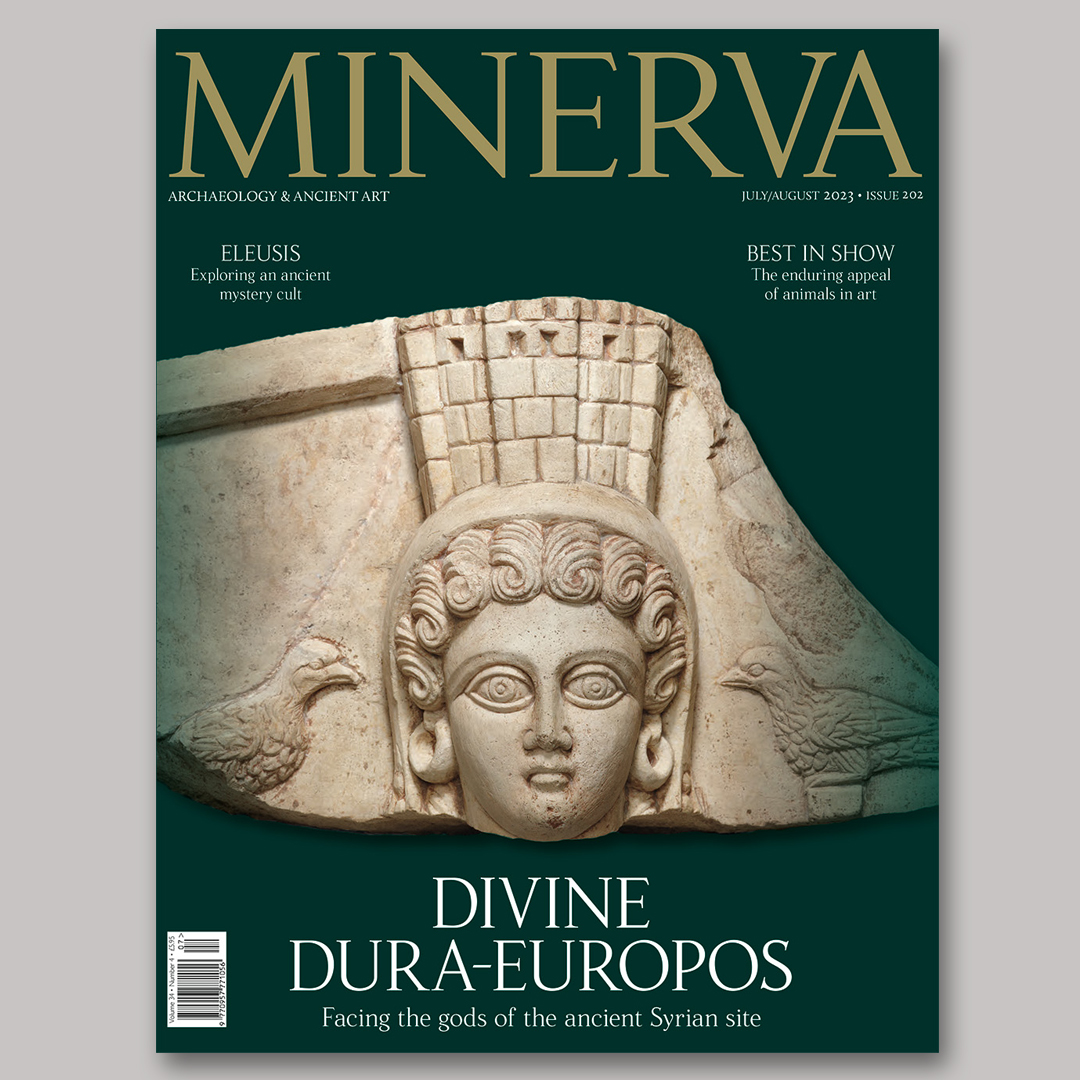
Minerva Magazine Editor Mark Merrony welcomes you to the first edition of the new decade and introduces some changes to the publication for the year ahead.
full editorial link
Towards a
virtual museum?
A ground-breaking project could usher in a new way of documenting and presenting artworks and archaeological artefacts. Researchers are attempting to capture sculptures and other ancient objects in a three-dimensional (3D) format that is as real as the original masterpieces themselves.
full feature link
A researcher scans the face of a life size statue, the dimensions of which will then be used to create a highly accurate 3D image of the object.
 
Evidence of long
distance wine trade?
The results of an underwater survey undertaken off Cape Greco on the south-east coast of Cyprus have demonstrated that wine amphorae, which came from a shipwreck dating to the 2nd century AD, had been transported all the way from France.
full feature link
An underwater archaeologist carries out a survey of the wreck site off Cape Greco, south-east Cyprus. Photo: courtesy of the Republic of Cyprus, Ministry of Communications and Works, Department of Antiquities.
 
Excavating the Bax
farm bath-house
Excavations undertaken at Bax Farm in Kent during the summer of 2009 have uncovered a unique and magnificent late Roman octagonal building containing a huge central plunge bath, probably constructed at the time of Constantine, the first Christian Emperor of Rome (r. AD 306-312).
full feature link
An archaeologists records the stone footings of the octagonal shaped building that contained the plunge bath.Photo: courtesy of Kent Archaeological Field School.
 
Rare Roman cameo
glass vase unveiled
Bonhams announced in October 2009 that a glass vase, that had been undergoing specialist study in the firm’s London auction house, is an extremely rare 2000-year-old Roman cameo glass vessel. The supreme quality of the unique piece also makes it one of the most significant of the handful of surviving examples of the Roman glass engravers art.
full feature link
The cameo vase features an upper and lower frieze, both of which are carved with consummate skill by a master engraver, probably working during the Julio-Claudian period. Photo: courtesy of Bonhams.
 
The Life of Meresamun: A Temple Singer in Ancient Egypt / Edited by Emily Teeter & Janet H. Johnson
Sites of Antiquity: From Egypt to the Fall of Rome / Charles Freeman
Portland Vase Interpretations / Dr Jerome M. Eisenberg
International Phaistos Disk Conference 2008 - Abstracts
Focus on Iraq - Looting the National Museum of Iraq / Dr Jerome M. Eisenberg
The following articles appear
in Volume 21 no.1  the
JAN/FEB 2010 issue of MINERVA
 
The dawn of British art: The archaeology of cave art in Ice Age England / Murray Eiland
Cults, crafts and culture: The re-opened Cypriot gallery in Stockholm’s Medelhavsmuseet / Marie-Louise Winbladh
A very perplexing collection: The mysteries that surround the Aigina Treasure / J. Lesley Fitton
Wave of destruction: The tsunami that swept across the Bronze Age Mediterranean / Beverly Goodman-Tchernov
A close look at classical masterpieces: Graeco-Roman art in the British Museum / Murray Eiland
Many facets of meaning: Interpreting Roman mosaics / Mark Merrony
In praise of Patras / Lina Christopoulou
Crossroads of cultures: The archaeology of Jordan goes on display in Italy / Dalu Jones
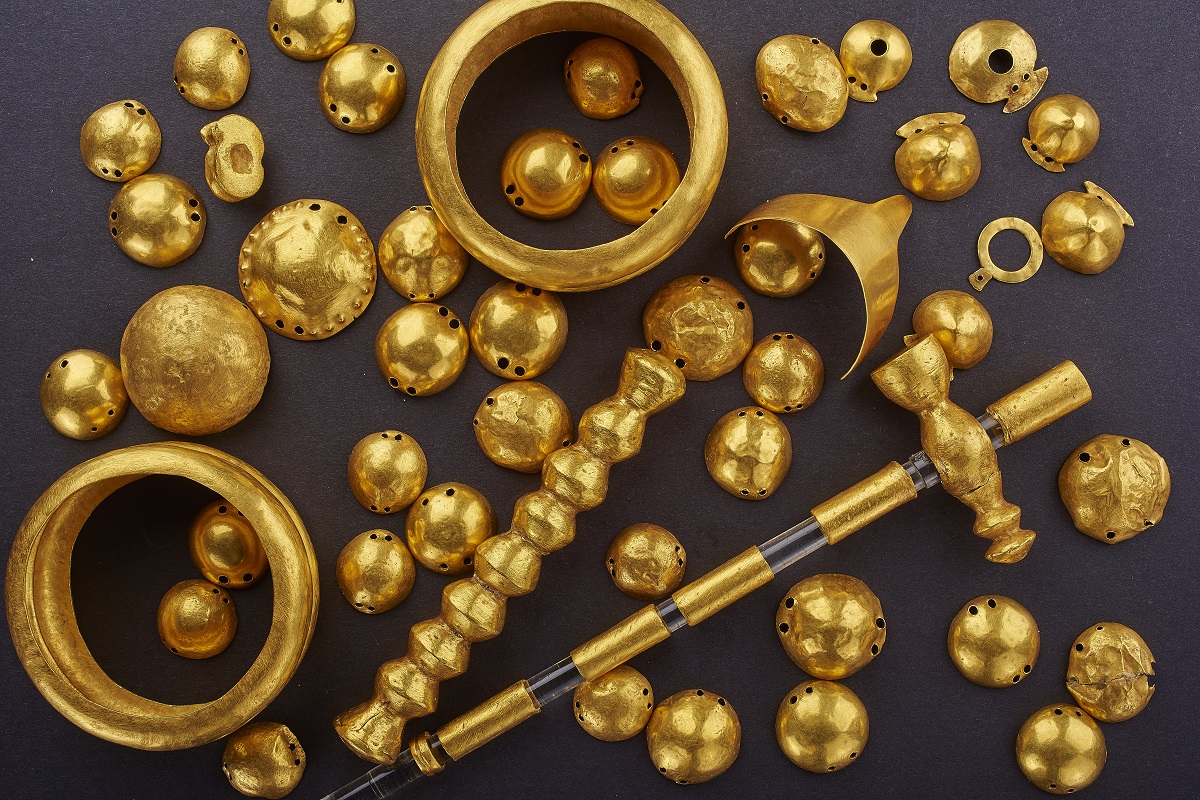
The art of war: The Anglo-Saxon society that gave rise to the Staffordshire hoard / James Beresford
Fit for a king? A reassessment of the Begram treasure / Chris Lightfoot
Mapping Jordan through the ages: 2000 years of cartography in Transjordan / Claudine Dauphin

Founder, Editor-In-Chief & Publisher
Jerome M. Eisenberg, Ph.D.
Editor
Dr Mark Merrony
Consulting Editor
Peter A. Clayton

 
website design by tektropica © MINERVA 2007. no reproduction without publisher's written consent
   split search terms with commas